
WordPress Just Quietly Became AI-Native
The internet is buzzing with demos of AI site builders.
“Build a website in 20 minutes. Deploy instantly. Brand new stacks everywhere.”
The showcases are slick, the speed is jaw-dropping, and the hype is real. But while everyone is staring at the shiny new tools, something much bigger just happened—quietly, almost unnoticed.
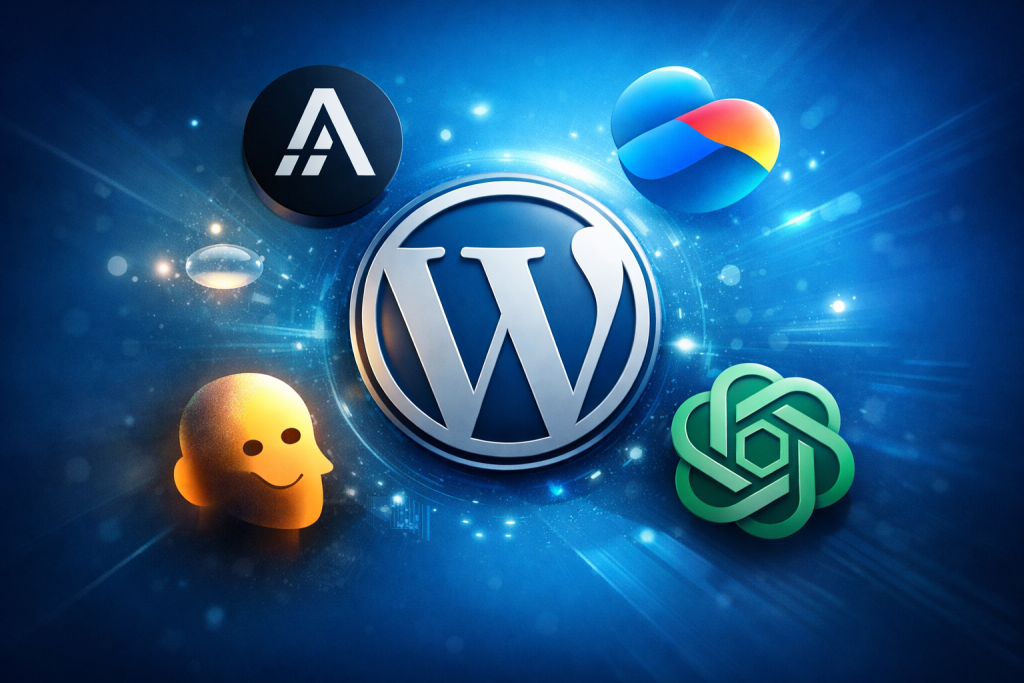
WordPress Integrated Claude, Gemini, and OpenAI
Yes, inside the CMS that powers 43% of the web (w3techs.com in Bing), WordPress now has direct integrations with leading AI models. That means the platform that has been the backbone of blogs, businesses, and billion-dollar brands for over two decades is evolving into an AI-native ecosystem.
- 23 years of proven stability
- The largest plugin ecosystem online
- True ownership of your content
- Freedom to change hosts or developers anytime
This isn’t just another demo. It’s a tectonic shift.
Demos vs. Platforms
The principle is simple:
- Demos attract attention.
- Platforms prove themselves over time.
WordPress has already proven itself at global scale. It doesn’t need to show off with flashy demos—it has decades of credibility, community, and infrastructure.
Now, it’s layering AI directly into that foundation. While startups race to impress with instant site builders, WordPress is embedding AI into the workflows of millions of creators, developers, and businesses who already rely on it daily.
Why This Matters
- AI-native CMS: WordPress isn’t just bolting on AI—it’s weaving it into the core experience, as covered by Search Engine Journal (searchenginejournal.com in Bing).
- Scale advantage: With nearly half the web running on WordPress, adoption can happen at a scale no demo-only tool can match.
- Future-proofing: Owning your content and controlling your stack means you can integrate AI without sacrificing freedom or portability, explained in ALM Corp’s guide (almcorp.com in Bing).
The Quiet Revolution
Everyone is watching the demos. But the real story is that WordPress—the platform that already won the internet—is quietly becoming AI-native.
And when the dust settles, the flashy demos may fade, but WordPress will still be here, powering the web, now with AI at its core.