When a Café Owner Asked Us About AI, Data, and Trust
A Café Owner’s Big Question: Can AI Truly Be Trusted With Business Data?
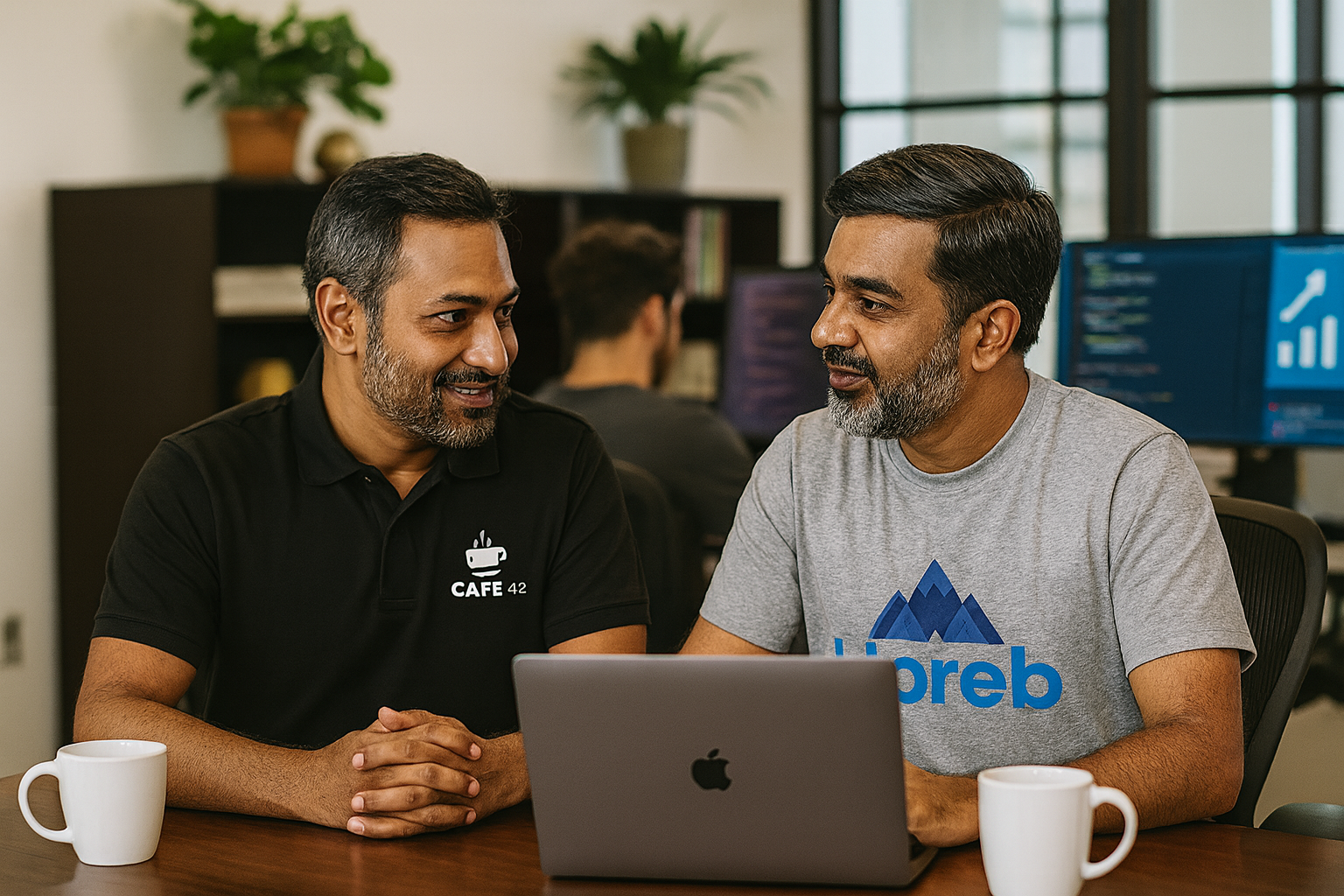
It started with a simple but powerful question from a café chain owner who approached us for a digital solution:
Business Owner:
“If you build an app for my business and deploy it on the cloud, does that mean the AI tool or the agency has access to my data? Can I really trust that my customer information is safe?”
We knew this wasn’t just a technical query—it was about trust, ownership, and the future of digital business. So we sat down to explain.
Access & Privilege
Agency Response:
“AI doesn’t automatically get privileges over your data. Access depends on how the app is designed and what permissions are granted. When we deploy on cloud platforms like AWS, Azure, or GCP, strict access controls are enforced. You, the business owner, can demand contractual clauses that guarantee your data ownership. That way, neither the agency nor the AI tool can exploit your information.”
Compliance Matters
Business Owner:
“But is there compliance in the first place? What if regulators come knocking?”
Agency Response:
“Absolutely. Compliance depends on your geography and industry. For a café chain, frameworks like GDPR (Europe), CCPA (California), or PCI DSS (for card payments) may apply. In India, businesses must also align with the Digital Personal Data Protection Act (DPDPA), 2023 and the operational rules released in 2025. These laws require you to collect customer data only with consent, safeguard it with encryption and access controls, and provide grievance redressal within defined timelines. If you’re handling card payments, RBI and PCI DSS standards also apply.“
To safeguard digital compliance in India, we recommend:
- Consent-first approach: Always inform customers why their data is collected and give them the option to withdraw.
- Data minimization: Collect only what’s necessary for operations.
- Retention policies: Don’t store customer data longer than required.
- Localization & hosting: Use cloud providers with India-based data centers to comply with cross-border transfer rules.
- Grievance redressal: Appoint a responsible officer or team to handle customer complaints within 90 days, as per DPDP rules.
- Regular audits: Conduct compliance and security checks to ensure systems meet Indian and international standards.
Whitelabel vs Subscription
Business Owner:
“I want to own the whole setup, but isn’t that impossible? Won’t it just be subscription-based?”
Agency Response:
“Owning a fully whitelabelled infrastructure is possible but costly. Most SMEs prefer subscription-based SaaS because it’s affordable, scalable, and maintained by experts. The trade-off is control versus cost. With subscriptions, you get reliability and speed. With whitelabel, you get full control but higher responsibility.”
Replication Risk & USP
Business Owner:
“If another café comes to you with the same requirement, won’t the AI just replicate my app? Doesn’t that kill my uniqueness?”
Agency Response:
“The code can be replicated, yes. But your USP isn’t the app itself—it’s your branding, workflows, customer insights, and service quality. Think of Shopify: thousands of stores use the same platform, but each one is unique because of how they customize and market themselves.”
Privacy & Security in AI
Business Owner:
“Can AI really guarantee privacy? How much percent can I be sure about it?”
Agency Response:
“Security isn’t about percentages—it’s about layers of defense. AI inherits the security posture of the cloud provider and the app design. Risks like hacking or phishing still exist, but we mitigate them with encryption, access control, monitoring, and backups. AI doesn’t manipulate data on its own—it’s the architecture and compliance that keep it safe.”
Data Restoration & Reliability
Business Owner:
“What if something goes wrong—natural hazards, system crashes? How fast can data be restored?”
Agency Response:
“That depends on the cloud architecture. With proper disaster recovery and multi-region backups, downtime can be minutes instead of days. Restoration speed isn’t about AI—it’s about how well the system is designed.”
Cost of In-House vs Agency/Cloud
Business Owner:
“Wouldn’t it be safer to build everything in-house, even if it costs more?”
Agency Response:
“In-house gives you control, but it’s expensive—servers, licenses, compliance audits, and a dedicated team. Cloud and agency models are faster, cheaper, and outsource the heavy lifting. For SMEs, in-house rarely makes sense unless you’re scaling massively.”
The Takeaway
At the end of our conversation, the café owner realized something important:
- AI doesn’t “own” or “exploit” data—ownership must be enforced through contracts and compliance.
- The USP isn’t the software itself, but how the business uses it to build customer trust and brand identity.
- Security in the AI/cloud era is about architecture, compliance, and monitoring—not blind faith.
- In-house builds give control but cost more; cloud/agency models give speed and affordability with proper safeguards.
Final Note from Our Agency:
“Digital transformation isn’t just about technology—it’s about trust, compliance, and strategy. Whether you choose subscription or whitelabel, the real value lies in how you leverage the system to grow your business.”